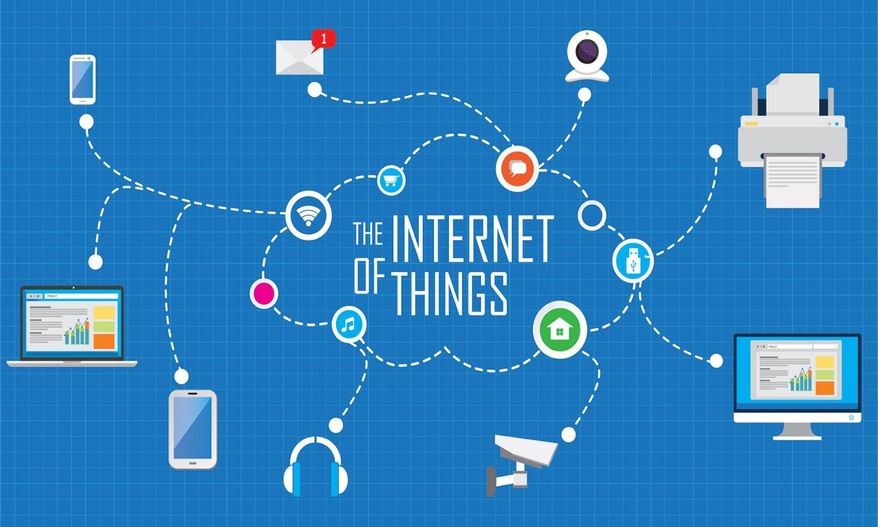
“From hairbrushes to scales,consumer and industrial devices are having chips inserted into them to collect and communicate data.”
-MATT BURGESS
What is IOT?
IOT means the network of physical objects that can be devices, vehicles, buildings and other items which is embedded with electronics, software, sensors, and network connectivity that enables these objects to collect and exchange data.
Internet of Things nowadays, has made everything so easy for people to access across all over the world. It is made up of devices from simple sensors to smartphones and wearables. Internet of Things shows that where can you go for the most up-to-date information and thoughtful perspective.It has wide applications in different areas like smart cities, business network & IT infrastructure, healthcare, education, retail, manufacturing, supply chain, etc.
Use of IOT in vehicles:
Now a days IOT is also used in vehicles,such as smart scooters, electric skateboards, and shared bicycles swamped the streets of hundreds of cities throughout the world in 2019. These new modes of transportation make up a new and growing category of products referred to as micro-mobility solutions.
Use of IOT in devices:
Now a days most of the devices are embedded with IOT, like phones, watches, home appliances, automobiles, etc to connect with other devices through internet so that they can exchange data and perform a designated task. The huge amount of data generated by these devices will require network of robust IT infrastructure to collect, store and analyze data to draw inference from them so as to assist in making smart business decision or give intelligent solutions to the end users.
How thing can be easy through IOT?
IoT helps in installing micro-sensors and controllers on things to make them ‘smart,’ i.e. allowing everyday devices to communicate and share data to some sort of network. Anything that can produce data can be considered IoT, practically everything in our natural and unnatural world: nano-technology in human tissue, smart parking meters, RFID devices, smart homes, drones, smart watches, smart cars, health monitors, and sensors for every industrial application on earth.
Technology Implementation:
Iot teaches us the concept of combining computers, sensors, and networks to monitor and control devices has existed for decades. The recent confluence of several technology market trends, however, is bringing the Internet of Things closer to widespread reality. These include Ubiquitous Connectivity, Widespread Adoption of IP-based Networking, Computing Economics, Miniaturization, Advances in Data Analytics, and the Rise of Cloud Computing.
IoT implementations use different technical communications models, each with its own characteristics. Four common communications models include: Device-to-Device, Device-to-Cloud, Device-to-Gateway, andBack-End Data-Sharing. These models highlight the flexibility in the ways that IoT devices can connect easily and provide value to the user.
IoT has its interest in the press, because we are just arriving at a point where low-power chipsets with built-in Wifi and 3G/4G connectivity are smaller, more powerful, and cheaper to produce. At the same time, the overall cost of building and maintaining the software networks necessary for these devices to communicate has declined dramatically. The beautiful Nest thermostat could be selling more than one million thermostats per year. In 2013, Tesla introduced the world’s largest interactive vehicle display. Mobile phones are streaming home security videos in real-time. Smart watches are monitoring our health while sending photos, emails and text messages.
IoT is just starting to mature, enterprises have long invested in critical IoT infrastructure. Companies like John Deere, Maersk, AT&T, FedEx, and many more have end-to-end IoT integrations for industries like global logistics, agriculture, asset tracking, security and more.
This space is hot with services like AT&T’s M2X, Autodesk’s, SeeControl, Xively, ThingWorx, ThingSpeak, DeviceHive, and more.
IOT Data Analytics:
According to IoT Analytics estimates, there were roughly 9.5 billion connected IoT devices at the end of 2019. That number is significantly larger than the forecast of 8.3B devices. The 3 main drivers:
- An explosion of consumer (particularly Smart Home) devices
- Much stronger than expected cellular IoT/M2M connections
- Particularly strong device connectivity growth in China.
The number of total connected IoT devices is now expected to reach 28B by 2025, further driven by new low-power wide-area (LPWAN) connections as well as 5G.
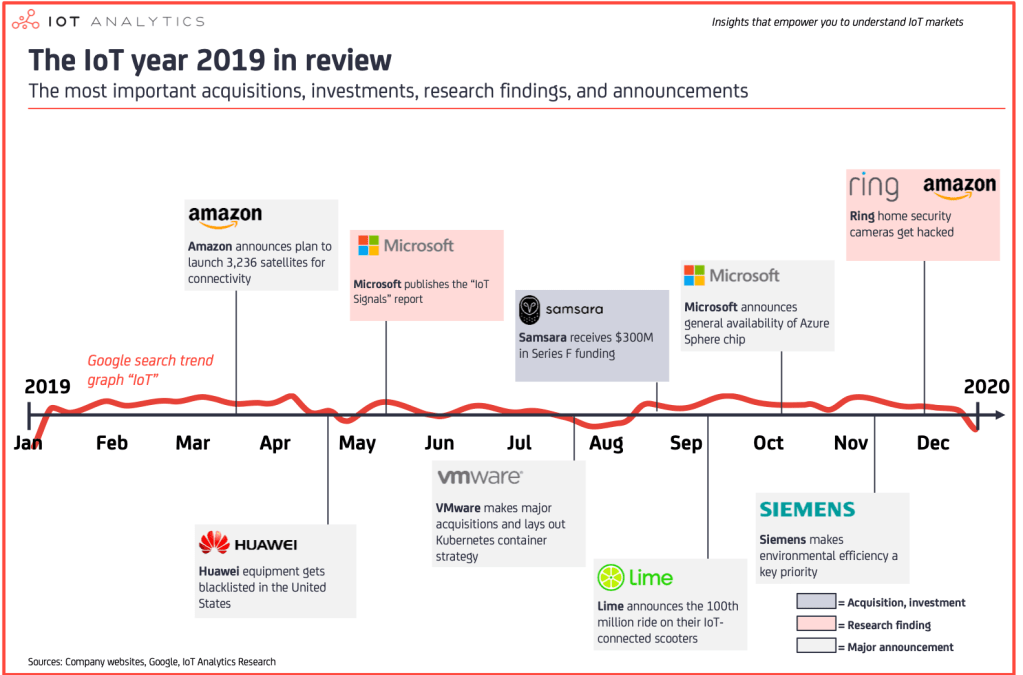
Data given below as per 2019:
 blog on data visualization